Dr. Melanie Sindelar
Academic writing and career coach for scholars in the social sciences and humanities — from PhD students to professors.

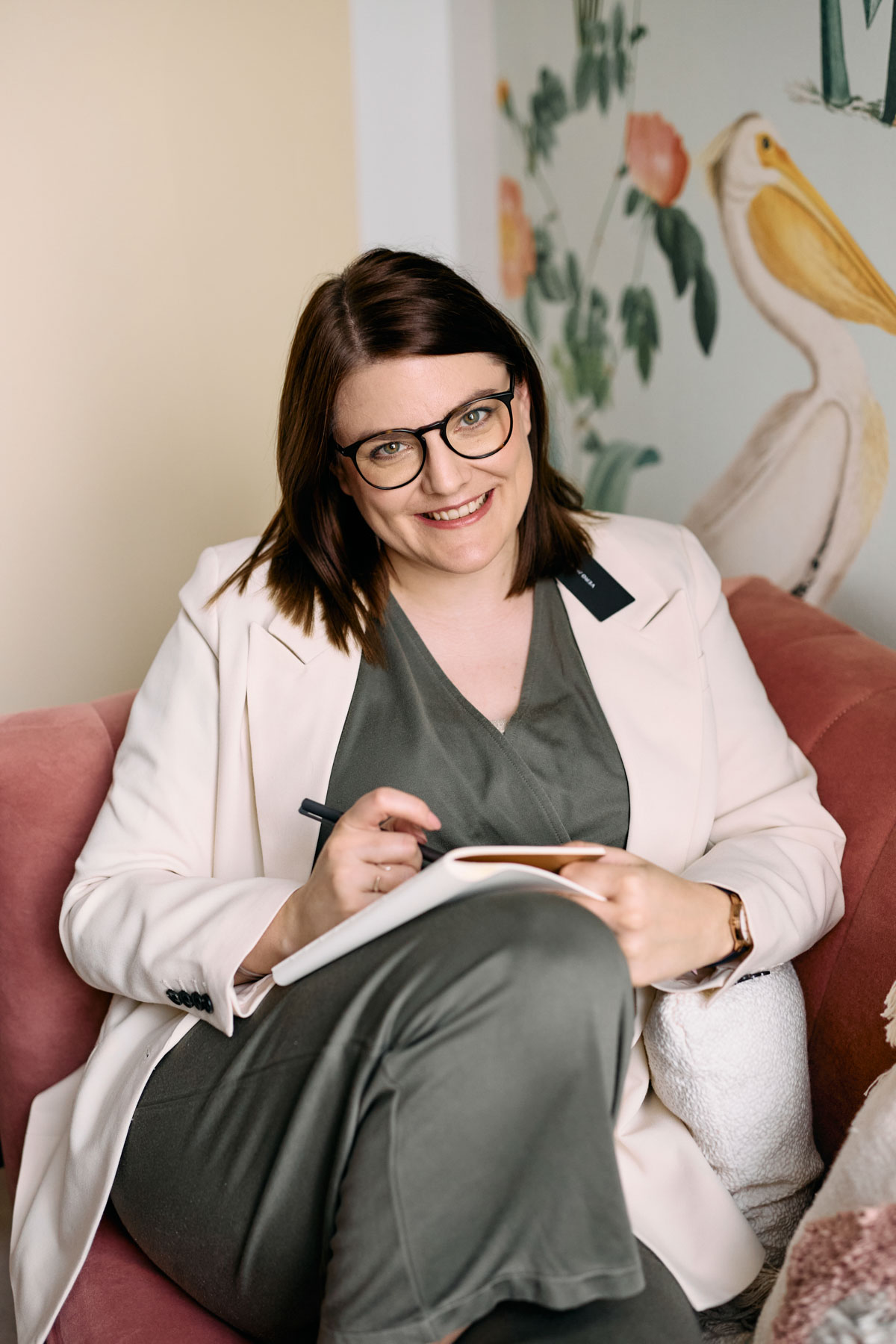
How I became a coach for academics
I never planned on becoming a coach. As early as my PhD, fellow scholars started reaching out — sometimes because I'd just won a grant, sometimes because of an article I'd published — asking how I did it. I slipped into coaching long before I ever called it that.
Today I keep one foot firmly in academia and one foot outside of it. I'm an Assistant Professor in the Department of Social and Cultural Anthropology at Charles University Prague, where I teach museum studies, art anthropology, decolonization and restitution, and supervise student projects. I'm also Editor-in-Chief of Urban People, an international peer-reviewed journal of anthropology, and my first book was accepted at a major US press.
That is only one side of the picture. I also led the Doctoral Center at the Academy of Fine Arts, which gave me a third perspective — the institutional one. I know firsthand what dilemmas and challenges universities face. Together, these three positions — scholar, coach, and doctoral-center lead — give me a view most coaches simply don't have.
I've moved through every stage I now coach others through — how to write a PhD proposal, how to win a doctoral grant, how to apply for postdoc and permanent positions, how to write a journal article, how to write a book and book proposal, and how to build a writing system that actually sustains you. And because I have also sat on the institutional side, my programs for scholars at universities are tailored and matched to different institutional environments.
A lot of writing coaches only have a master's degree. I bring the actual lived experience of the path you're on — the grants, the publications, the rejections, the institutions — not just techniques learned at a distance.
Coaching social sciences and humanities scholars
I've worked with archaeologists, Egyptologists, literature scholars, anthropologists (my home discipline), the broader social sciences, and even adjacent fields like the environmental sciences — as well as art historians, historians, and arts-based researchers. What unites us is the shape of the work: we produce a lot of long-form writing, our thinking takes time to mature, and the reward system is much more delayed than in the hard sciences.
That's exactly why it matters even more to have a process that keeps you engaged, a structure that holds when motivation dips, and small ways to reward yourself along the way — not only when the grant comes through, but for actually submitting the application; not only when the article is published, but for finishing the draft.
The process I run with every scholar
Six stages that take a project — and the scholar behind it — from a vague idea to a finished piece of work and a next career step.
Hover over each letter to read more about the method.
Academic path
I trained as an archaeologist (BA) before completing an MSc in Social Anthropology at the University of Oxford, where I specialized in the Middle East. My doctoral research was supported by a prestigious IFK Junior Fellowship and a research stay at the Max Planck Institute for Social Anthropology in Halle (Saale).
My PhD focused on the contemporary art market in the Gulf. I did fieldwork in art institutions, gallery districts, and art schools across the region, and my book manuscript is currently in the finishing stages with a press in the US.
After the PhD I moved through the familiar postdoc circuit: the Austrian Academy of Sciences, the Ruhr University Bochum, and now Charles University Prague. I was also a Visiting Professor at the Central European University, where I taught an art-based methods course.
Off the page: I commute between Prague and Vienna, love art, ski, and play tennis.

The spirit of EMERGE Scholars Collective
EMERGE Scholars Collective is built on a simple belief: scholarship should not feel like a lonely struggle. Intellectual work deserves protected time, clear structure, and a community of peers who take their ideas seriously.
Because scholarship is not only about productivity.
It is about building a meaningful intellectual life.
Want to work together?
Whether you're looking for a community to write alongside, one-to-one coaching, or editorial support, there's a way in.